Showing posts with label #author. Show all posts

Reflections of a Dog Handler's Wife ~ by Author Laura Frost

Dogs play an important role in our world, whether through
delivering a sloppy kiss or by proudly wearing a service jacket. I am fortunate to have had an amazing canine in my life that played both roles.

Gus was a police narcotics dog, trained to sniff out a wide range of drugs. His skills were used to search prisons and airports, but most often, Gus sniffed suspicious vehicles traveling down the nation’s highways.

As a chocolate lab of just over a year, Gus had destroyed his owner’s yard by ripping apart the fence and digging a series of holes, as though an elusive bone must be hidden somewhere beneath the once-manicured grass. Gus’s owner realized that Gus was not an average dog built for life as a family pet, but rather one that needed to have his energy harnessed for a higher purpose. Thus, Gus entered the Police Dog Services program at the Royal Canadian Mounted Police dog training facility where he was paired up with my husband, Ryan, in the fall of 2009.

Gus and Ryan were a perfect randomized match for one another, flipping from peas in a pod to fighting for rank as the alpha of the team. Both stubborn with a deep drive to perform, Gus and Ryan excelled in their training while always trying to one-up each other.

After graduation from training, Gus came to live with our family in the beautiful Rocky Mountains. With Gus’s unyielding energy levels, we could not trust his hungry mouth and ever-wagging tail inside our home, so he lived in a large kennel in our yard. Cement pad, chain-link fencing, plywood roofing – the dog who loved to plan a jailbreak needed a special home. He had a lovely double-insulated doghouse in his kennel, plenty of food and water, multiple walks (or a mountain hike) a day, and so many sticks to chew and destroy.

Yet, he wanted more.

The barking. In those first days, non-stop barking – not acceptable in the close quarters of a small mountain town. Ryan bought a bark collar that sprayed citrus oil every time Gus barked. It settled him for about an hour.

Then Gus tested.

Just how loud could Gus bark but not release the annoying spray into his face? He figured it out and we became used to the low rumble of Gus’s perfect tone, just below squirt threshold.

Gus spent his workdays traveling the highways in a police SUV, ready to brace himself when Ryan yelled, “Hang on, buddy!” as he learned to lean into a sharp turn, sirens blaring overhead. Gus’s days off were spent hiking to tops of mountains or playing catch in our yard. No matter what Gus was doing, his energy levels ruled him.

Despite being a police dog, Gus was also part of our family, and so he went on family vacations with us, training with Ryan between hotdog roasts and family walks. On one sunny winter day at our cabin, we had shoveled a spot on the lake for skating. Gus had freedom to run on the frozen water, all the while being psychologically corralled by Ryan. Unfortunately, no one thought about the luscious winter boots that had been left on the bench by the ice. Gus snagged our son’s boot and turned it into a wonderful hour-long game of “watch Ryan chase and swear at me.” That was a very fun day for Gus.

Summer at the cabin was full of other adventures. One day, after
what was surely an exhausting swim in the lake for Gus, Ryan secured him to a tree and gave him a bone to chew. Gus rolled his eyes and turned his attention to the leash itself, chomping away until he was running free, tattered leash trailing behind. Shaking his head, Ryan hauled out a metal chain. Surely that would do the trick. Now chained to the tree with a fresh bone to love, Gus eyed the source of the problem: the tree itself. Just as Gus closed his canines around the scrumptious trunk, Ryan relocated him to the deck, with no tree close enough for Gus to get his mouth on. So, Gus chewed the deck.

When it was time for our family to take the boat out, Gus was left in his kennel to chill. (Haha… “chill”) We had a glorious day on the water and, as we hopped from the boat onto the dock, Gus appeared. He galloped towards us, pink tongue hanging out and lolling in the breeze. “How did you get out?” Ryan asked. We inspected the kennel and realized that Gus had disappeared into his velociraptor persona again – testing the kennel for weak spots. He used his four-thousand dollar tooth (a previous repair due to his propensity to chew non-chewable objects) to pry up the bottom of the chain-link fencing of his kennel, just enough for him to wiggle under and break free. And fixing the escape hole? Ha. It took a number of tools and all of Ryan’s strength to bend that fence back into a semblance of its former state.

Although Gus was destructive at times, he was able to harness his energy and put it to work when the time came. Gus’s primary goal in life was to play with his Kong – something he only got to do that when he worked hard. When Ryan directed Gus to search a vehicle, Gus took all his crazy energy and put it into his nose, searching until he narrowed in on the scent and found a stash of drugs. The RCMP were able to take another traveling criminal off our highways and Gus got to play with his Kong.

By the end of his policing career, Gus had helped take over sixteen million dollars worth of illegal drugs and other contraband off our highways. Gus had also eaten one patrol jacket, a first aid kit, the stuffing from too many “indestructible” dog beds, the headrest of a police SUV (which created a diarrhea bomb that was comical to all but Ryan), the weather stripping from three police trucks, and too many sticks, shrubs, and trees to count.

Gus eventually retired from police life and, for six weeks, became our own. My walking friends teased me that I was growing “pipes” because of the craziness that I had to control at the end of my leash for the five kilometers that we walked each morning. It was that same energy that took four grown humans to hold Gus down at the vet clinic to administer his annual shots. To paraphrase the vet: “Labs have an energy level of 9. Chocolate labs are a 10. Gus is a 15.”

Although Gus was an important part of our family, we quickly realized that he was never meant to be a pet in the classic way and was getting bored sitting around while the rest of us rushed off to jobs or school. With heavy hearts, we said goodbye to Gus and sent him to his new life as a sniffer dog at work camps.

After a couple of years cleaning up the camps, Gus’s senior years began to take hold and he was finally able to live inside a house without completely destroying it. With the assistance of Ned’s Wish, a foundation that supports police dogs in their retirement, Gus found companionship with his new family, including their autistic boy who bonded with Gus. Yet, as much as he would spend his time cuddling up to his new favorite person, Gus’s energy still crept out and the family would have to buy a new indoor kennel every few months after Gus destroyed the last.

Gus passed away on October 28, 2019. For a dog who was impossible to manage at times, who ate everything in sight, taunted my husband with his stubbornness, and outsmarted devices designed to control him, Gus was a champion at keeping our nation safe, and then at being a companion for a child who needed a dog just like him.

From being sling-rescued off a mountain by helicopter, to standing proudly beside a hundred pounds of confiscated marijuana, Gus packed a hundred years of stories into his eleven years of life. Thank you, Gus, for all you have done for our family, other families, and our country.

May the walks be long and the sticks be plentiful in doggy heaven, old buddy.

Laura Frost is a writer of upmarket fiction and is pursuing publication of her novels. A pie aficionado, Laura has crafted 103 distinct pies and cannot imagine a life without flaky crusts and interesting fillings. She has restless feet and her passion for adventure has led her to many different corners of the world, from the chill of the Arctic Ocean to the peace of a Nicaraguan mountaintop. To connect with Laura, please click the links below.


On Being a Photojournalist and ESL Teacher ~ by Joan Ramirez

I came out of the womb asking for a pad and pencil.

I was looking at magazines in my crib. 

I remember with fondness my mother sneaking a peek in the recreation room of our home, where, at nine, I organized a writer’s circle for a group of my school friends.

I wrote my first short story at twelve and was so hooked on storytelling, I’ve been writing ever since. 

copyright Joan Ramirez
Being an ESL teacher is one of the most rewarding jobs I’ve had. It has given me the opportunity to teach creative writing in Vietnam in French and English, as well as conduct workshops in the townships of Cape Town, South Africa, and motivate college students in Seoul, South Korea. 

Here in the States, I’ve taught the most delightful elementary and middle grade students to master the English language. My Japanese and Korean students have won my heart. They absorb knowledge like eager sponges and retain it with pride.

As to being a photojournalist, from the moment my mother gave me my first camera when I was a Girl Scout, I’ve had a love affair with photography. 

copyright Joan Ramirez
I’m proud to say that the attached photo—New York Sunset--was a runner up for a TIME OUT Magazine cover. I’ve circled the globe many times to capture sunrises and sunsets in South Africa, shoot on safari, and visit schools to teach photojournalism in Vietnam, Hong Kong, and Thailand, to name a few countries.  

When I have a camera in my hand, I’m in another world. For me, it’s the best part of travelling. Recording the smiles of children, shooting panoramic landscapes, and capturing the local color are some of my favorite things to do when I’m overseas. 

It’s a passion that grows stronger every year. Someday, when I am able to take a break from teaching and novel writing, I intend to publish my photo treasures for the entire world to see and enjoy.

Joan Ramirez
Author, teacher, and photojournalist, Joan Ramirez, holds a Master of Science in Business, Medical, and Technical Journalism as well as two others in ESL and Education. She has published on a variety of topics from cochlear implants to the economy and has conducted workshops -domestic and foreign-on the nuances of business communications for managers and start-up companies. She is the leader of her own enterprise with training programs for entrepreneurs. Readers can find Joan's photography on Fine Art America and her books Go For It Leadership Handbook for All Students and Jamie is Autistic:Learning in a Special Way on Amazon.com and B&N.com. If you are interested in reaching out to Joan, please do so through the link below.


A LITTLE ABOUT WHERE I LIVE~by Margarita Felices

…and the reason why I can be inspired by just walking around.

City Hall
I have always lived in Cardiff, the capital of Wales. It’s home to Triassic and Jurassic coastlines, ancient ruins, castles, mountains, rugby, Doctor Who and Torchwood. I live here with my partner and three little mad dogs and I work for a well-known TV broadcasting company.


Norman keep

I love living in Cardiff because for all its 
modernisation, there are still remnants of an old Victorian city. 


Then you can venture a few short miles towards the bay. 
You probably wouldn’t believe that 50 years ago this land was the Docklands and where the pillars in this picture stand, it used to be the Dry Dock where ships came in for repair. It’s changed a lot since I was young. I’m from the area and even though they have made it one of the top places to live in the country, they took away the community that lived there and it doesn’t have the heart that it had once. It’s modern and clean, but it’s also cold and uncaring, and as much as I do like what they’ve done with it, I miss the history, the mixed cultures and the smiles from the families I used to know.

I love writing and will often base my stories in Cardiff because it has such character. When I can, I go out to the coast and take photographs. We have a lovely castle in the city centre and a fairytale one just on the outskirts, so when I feel I can’t write anything, I take a ramble to those locations and it clears my head. 

I have a TV production background. I used to be a professional photographer and decided to move into the TV world. I started off working on our local news programmes and then moved on to Arts, Factual, Drama, back to Factual, back to Drama (Torchwood, Doctor Who and a few regional shows). Now I work for the BBC National Orchestra of Wales and we produce some of the music for well-known TV shows- Doctor Who for example! I’ve learnt so much from working there about Marketing and Promotions. It’s been an absolute blessing.

It was inevitable that someday I would write novels. My teachers at school used to limit me to no more than ten pages when they’d give out written assignments. I was a reporter on the school magazine and later became its Editor. When I left school, I paid my way through college by writing short stories for various women’s magazines and I later took a course in scriptwriting and came third in a BBC writing competition (I wasn’t working for them at the time).  

I have pretty much written stories all my life and one day I had a unique idea for a story and I began to write it. It took ten years to get it the way I wanted and when I’d finished I began to search for a traditional publisher, but got rejected each time. Every author goes through those rejections, but the trick is to never give up. If you have a story, then tell it. I did a little more research and found a small independent publisher and submitted the synopsis for Judgement of Souls 3. The publisher asked to read the whole thing. That was 2012 and I've not looked back since.


MY WRITING PROCESSES
I have a rather strange process. I usually know the outcome. I may even know the beginning and that's it. I will sit down and type what the first page should be about. Then on a new page I will put my characters in certain places/situations. I go through that process until I have a basic outline and then I fill in the blanks. It may be as many as 30 pages with a very basic outline. 

I have a notebook with me at all times. There's never a time when I'm not thinking about the plot or perhaps character dialogue. I'm a researcher too. If I can, I will visit the locations and take notes and pictures. I will read books in the library or search the internet for information. Judgement of Souls 1: Origin, for example, involved the Crusades so it was a lot of reading to get the battles, the uniforms, the main tribes correct. Judgement of Souls 2: Call of the Righteous, involved the French revolution plus 300 mortal years of an organisation so dates, places, and times all had to be accurate. 

WHO ARE MY FAVOURITE AUTHORS?
I am a lover of paranormal horror. I read Anne Rice (Vampire Chronicles is my favourite) and Stephen King (pretty much anything from him except IT – nope, nope, nope).
  
Anne Rice is almost poetic in her writing and she gave me advice a few years back that helped immensely. She's a friendly, approachable person. 
Stephen King knows how to make you jump just at the moment when you think all is well. I am hoping to do that in my novels and have attempted to use his magic in my short story, The Trancers.

WHAT HAVE I BEEN DOING WITH MY TIME?

My latest book release in January 2020 is called RHIANNON. I have always loved the myths that in the darkest parts of Wales there were witches in covens. There are several tales such as the Mabinogion that mentions Rhiannon and I’ve always found the old tales fascinating. 


Rhiannon must have been the fastest novel I’ve written. Once I started, I couldn’t stop thinking about where to go next. The story was to start in modern day with just flashbacks, but I felt quite early on that it had to start with her story, so that even though you knew she killed men, I explored why she did it. She had a history and a past that needed to be told in full before I brought her into our time.


The first half of the book is based in the 16th century and it centres on a beautiful woman called Rhiannon as she arrives in the village of Treharne in North Wales. But Rhiannon isn’t all she seems. She has come to visit an old woman who has lived on the outskirts of the village for over 40 years. You see this woman has a secret and Rhiannon wants what she has hidden – souls. But the old woman should have sensed Rhiannon’s aura, after all what’s the point in being a witch if you can’t spot one of your own? But soon the old woman is gone and Rhiannon has taken over her cottage. One day she meets a man and his wife in the village store and soon after becomes his lover. 

A jealous wife, village gossip, special medicinal potions and Rhiannon is accused of being a witch and goes to trial. But she’s pregnant now and her powers don’t work while she’s pregnant. Rhiannon tries to escape but is captured while she is giving birth, her child is left out for the wolves and she is sentenced for witchcraft (after all why run if you’re innocent) and she is burnt at the stake. 

Four hundred years later, a student researching a story finds an interesting artifact and accidentally brings Rhiannon back – and Rhiannon is out for revenge.


To learn more about Margarita Felices and to see her complete list of books, visit her on her 
AMAZON AUTHOR PAGE and AMAZON UK.


Three words authors dread ~ by Joanne Jaytanie


There are three words that nearly all authors dread—advertising, marketing, and promotion. By nature, most authors are introverts. They want to write their stories and put them out into the world and have readers gobble them up. Wouldn’t that be a wonderful world?

Even with my background in marketing, I’m no different. Promoting my books is a challenge. I have discovered that the more you do it, the easier it becomes. Think of it this way, you have produced a product—I  know it’s not a product to us, it’s hours, weeks, months of pouring our thoughts, feelings, and emotions on to a page and creating a world that is unique and exciting.


Every story you write will feel this way—that’s what makes you an author. However, when you remove the emotional attachment and look at it from an outsider’s perspective, it is a product.  

Indie, hybrid, or traditionally published, you will have to promote to succeed. Facebook, Pinterest, Instagram, and Twitter are all places you can spread the word. Have you done any interviews? Magazines, blog tours, and podcasts are all great venues to use.


I interviewed with InD’tale Magazine. My interview was published in the February issue. Interviews are a great opportunity for readers to get to know you as a person and author.


In truth, the number of authors who release books each year is staggering and is on the rise.


If your goal is to have more than your family and close friends know about your books you must promote. No matter your budget, with research and perseverance, you can find ways to let people know about your book.


Until next time~
Joanne

Finding a Writing Rhythm ~ by Author/Artist/Photographer Mina Beckett

As my bio says, I’ve been reading romance since I was a teenager.
About me link
While my friends were crowding into football games, I was curled up on the couch, listening to my Walkman, switching between my sketchpad and a romance book.  

My mother remarried and moved to Texas when I was sixteen, but I stayed in Kentucky with my grandparents to attend school. I spent my summers in Midland with her and my sister and never made the long trip without at least a dozen books. Back then, I could gobble up three to four romances a day.

Penny Jordan and Sara Craven were some of my favorite authors, but my first summer in Texas, I discovered Elizabeth Lowell and Diana Palmer. There I was, reading Fire and Rain, Granite Man and Calhoun while living in West Texas surrounded by real-life cowboys. It was the perfect catalyst for my young imagination. I began filling notebooks with ideas, character profiles, and short stories. I’d write a few paragraphs and then do a few sketches of different scenes and characters.

Fast forward ten years. I’m married, have two children, a full-time career and no time to write. My notebooks were shoved to the back of a closet and deemed unimportant. But the characters in my head were stubborn and not easily dismissed. They’d show up at the most inconvenient times, like at board meetings and during presentations, so I tried to appease them by jotting down ideas here and there. But they kept talking, loudly. It wasn’t long until those thoughts were filling notebooks again.

After spending almost two decades earning degrees, working full-time and raising children, I decided it was time to revisit my writing, so I cleaned out my utility room and set up a small writing space. There among baskets of dirty clothes and dryer lint, I began drafting my first story.

I was so excited!

But writing to complete a full-length novel for submission wasn’t anything like writing short stories for fun. I’d write a page or two – usually, things I’d scribbled down while I was at work– but then, my mind would stall. I’d spend the rest of my writing time staring at my keyboard. It was so frustrating! Soon, doubt moved in, pulled up a chair, and began whispering in my ear. Maybe writing for submission was just a childish dream. Maybe I wasn’t a writer at all.

I battled with Impostor Syndrome for months, not knowing it was a common problem among writers or how to deal with it. It took me over a year to finish the first draft and I can honestly say, it was horrible. The book didn’t get any better when a small press publisher contracted it in 2014. My second book was published the following year, but I was still struggling with the words.

My husband and I were financially stable enough that I was able to resign from my job and devote more time to my writing and work part-time in the company we owned. I finally had time to write! I moved out of that dark and dusty utility room and into the guest bedroom. Looking back, I know I resembled Andy Farmer (Chevy Chase) in Funny Farm.

In 2016, I outlined a new series called Coldiron Cowboys, wrote blurbs for the three books, and hammered out a rough draft of the first one (still stalling and struggling). But I didn’t submit it to the small press publisher. My gut told me these books were going to be different and they were.

In 2017, I regained the rights to my first two books, shelved them and enrolled in Gwen Hayes’ Romancing the Beat. That class transformed my writing and I was able to finally find my voice. That’s such a wonderful feeling!

I began working on a series proposal for the Coldiron Cowboys and successfully landed an agent. We submitted The Heartbreak Cowboy (book one) to the big five, went through a grueling four-month rewrite for a top ten publisher, and received wonderful feedback from an acquiring editor at Harlequin. But, in the end, I stepped away from her on good terms without contracting the series.

But it was during that rewrite that I made a giant leap forward. We had a conference call with the acquiring editor who requested the rewrite to discuss the changes she wanted. I did bullet points reflecting those changes in the appropriate chapters and had a firm grasp on what needed to be done. I had written the story, knew it and my characters inside and out, but after an hour of writing, I stalled.

I couldn’t understand why it was happening until I found some of those short stories and sketches I’d done in Texas. Suddenly, it hit me. Walkman. Sketchpad. Book. My brain was wired to multitask not to sit in front of a computer for hours trying to churn out chapters. Those first two books had been written while I was on lunch breaks, in class, and at little league games. I needed to find a rhythm so, I began experimenting by incorporating different hobbies and projects into my writing routine.

I set daily word goals, wrote in short spurts of five to eight hundred words, then switched to working on a watercolor painting, took a walk around the farm to snap a few pictures, baked a cake worked in Photoshop.   


Pinterest link

This has worked wonders for me, and I don’t think I would have been able to write so productively if I hadn’t found this rhythm. I wrote my first Christmas romance in 2019 and I did it in only three months.  
Website


I re-branded myself, started CurtissLynn Publishing, and self-published The Heartbreak Cowboy. I’ve since published three more books and started a new series. Breaking the Cowboy, the third and final book in my Coldiron Cowboys series will be released in March and there are at least three books planned for the Rough Creek series. Hollywood Cowboy (Morgan’s story) will be hitting Amazon sometime in the late summer or early fall. I’m crossing my fingers that Montana Cold (Colton and Lauren’s story from The Heartbreak Cowboy) will make it into readers' hands by Thanksgiving.

With each book I write, I learn more about myself, my voice and my writing process.

Thank you for having me as a guest today!


To learn more about Mina, click the links under the photographs or those listed below.

Don't let fear stop you from following your dreams! ~ by Linda Boulanger


Tuesday, Sept. 3rd, I took a deep breath and began a new journey. You might remember my announcement last month that I've decided to retire from cover design so I will have more time to devote to family matters and to more fully pursue my own writing. Well, as of Tuesday, the entire Boulanger Tribe is either in school or back at work... and that includes me. I got all caught up on laundry, made a meal plan that I seem to be sticking to, set a word count goal and have spent two glorious days adding to my current writing project.

Keep in mind that I have battled back and forth with myself for weeks over whether I made the right decision. Perhaps I should have retired from writing to focus fully on the cover designs for others... but I couldn't do that. I have a saying: Writers can't NOT write. Yes, I know that will probably make my editor scream, but it says it exactly as I believe. When a writer has a story inside him or her, it simply has to come out. It has to be written, and with every cover I willing and happily designed for someone else, my dream of working on my own stories was growing in strength.

Now, I do not regret the time I have spent designing covers in the least. I LOVE working with other authors whether it's as a designer or a fellow author and feel the time has helped me grow in so many ways, especially as a writer. So, now, I have to believe in myself and follow my dreams.


Whew! That is a hard thing to do! I don't know many authors who don't feel at least a modicum of angst when releasing a book... and I've worked with and am friends with some pretty big writers! It's scary and the what ifs start slamming you from every side. So much so that on Monday evening I told my dear friend Grace Augustine that I wasn't sure I could do this, that I was doubting my skills as a writer, and that I thought maybe I was making a mistake.

What she told me calmed me more than even she might have imagined. First, she told me to stop it! But it was this little quote that really drove home what I needed to do: "Change your thoughts and you change your world." ~Normal Vincent Peale.


 She couldn't have chosen better words to have gotten through to me. I knew then that I couldn't let my fears of the unknown stop me from following my dream.


I have a plan. I've set it in motion. And I've changed my thinking... I fully believe in my dream and my abilities to pull it off.

In a future post, I will tell you about what I'm working on. The research has been fascinating and I'm anxious to share what I've learned. Until then, unlike the little engine that said, "I think I can," I will keep telling myself, "I know I can. I know I can." until I can say "I knew I could." I'm excited! And, as always, thank you for being a part of my dream.


The Heart of the Working People Part 3 ~ by Shlomo Klein

Try Listening!


Yesterday, I had the opportunity to facilitate a meeting between an inventor, his partner, and venture capitalists.

The meeting came about when I was at lunch at a neighbor’s house during a previous weekend and reacquainted myself with an old friend. Although we both grew up in Brooklyn, and he now lives near me in Long Island, our paths have not had the opportunity to cross.

We caught up as to what each other was up to recently. I told him that I was in the middle of editing my Young Adult novel for a December/January publication, and still had my day job of running a company in the beauty industry.

At this, he mentioned that he was the Director of Finance for a private equity firm and that his company was currently looking at another beauty company to invest in, wondering if I was familiar with them.

Responding that I was not, I proposed that his firm might be more interested in looking at my friend’s company that recently patented something for the beauty industry.

Fast forward two weeks later, and we had a meeting yesterday with my friend, his partner, and my neighbor’s company.

Picture this, an inventor with 30 years experience as a hairdresser, his partner, worth $200 million dollars, and the two private equity investors representing a 100 partner investor group that make minimum investments of $50-$100 million in companies. The money in the room was astounding, even more so was the complete disconnect of the three primary individuals that were running the meeting! 

Don’t misunderstand me, each one wants the deal done, but what was so surprising was that people don’t actually listen when the other asks a question. It seemed that everyone had a spiel that they wanted to say, and that was their main focus.


For example:

1) The inventor had a video showing the benefit of his product over the competition. He showed the video, everyone got it, and yet he said, “Let’s watch it again!” His partner and I both secretly motioned to him, not to do so. I get it, he’s proud of his invention, it’s his baby! He wants to share that with the world, but don’t waste time in a meeting of this nature.
2) The equity people asked, “how come no one else in the world has come up with this?”
        The investor answered (I kid you not), “if you took all the brains of my competition, and crushed them into a little ball, it wouldn’t come near the size of my brain!”
        Really? Bro! No one is denying that you have an incredible product. These investors wouldn’t have taken time for the meeting otherwise! But Business 101 says, don’t put down the competition.          It’s tacky.
3) The equity guys asked, “for the amount of money that you’re asking for, what are you giving us in return?”
        The inventor answered that he was putting up the patents as collateral.
        They then responded that it wasn’t enough, because there weren’t sales to justify the investment they were being asked to make.
        The investor responded with a long-winded soliloquy about I’m not sure exactly what.
       Now I was sitting there, knowing full well that the company already had sales and confirmed purchase orders, in six months, of over two million dollars!
       No one said it?! Why the heck not? I didn’t feel that I had the right to speak up, because I hadn’t seen the actual financials, and I didn’t represent the inventor, I was only the matchmaker.
4) The equity people didn’t think they could make the type of investment being asked, in return for only the patent rights. I was told by the inventor, the day before , that he would be offering an equity stake for the investment. During the meeting, neither the inventor, nor his partner said that they were offering equity. 

WHAT?!

Eventually, they did say that they would offer equity, but why did it take so long to answer their direct question? This wasn’t a negotiation to get an investment in return for an equity stake, the basic deal had already been laid out.

In the end, the product was so revolutionary, and the market so proven, that the deal will most probably go through, in spite of everyone’s not listening to what the others were saying.

This is an incredible life lesson that I learned. No matter if it’s a conversation between two people, or a multi-million dollar deal, people innately are more interested in hearing the sounds of their own voice, than listening to the other person. I can only hope that I spend more time in the future listening, than talking.

Shlomo Klein is a screenwriter, movie and TV/streaming series
Shlomo Klein
reviewer, and businessman who lives in Long Island, New York. His movie scripts include: John Ericsson’s Monitor – A historical re-telling of the events leading up to, and including, the battle of the Civil War Ironclad’s and Men of Midway - The story behind the Battle of Midway, the greatest naval battle in US history. The fight against the Japanese that turned the tide of war in the Pacific, and the men responsible for it. He is a lover of naval war ships and was originally inspired as a child by many visits to the USS Enterprise.

To connect with Shlomo, click the link below.


Writer, Not an Author? by Lexa Fisher


Photo by Kaitlyn Baker on Unsplash


When is a writer an author? Most people will have their own answer. Dictionary.com
says of a writer, “a person engaged in writing books, articles, stories, etc., especially
as an occupation or profession; an author or journalist, and a person who commits
his or her thoughts, ideas, etc., to writing.”


An author, on the other hand, is defined as a person who “writes a novel, poem,
essay, etc.; the composer of a literary work, as distinguished from a compiler,
translator, editor, or copyist, and the maker of anything; creator; originator.


Even with dictionary definitions it’s not easy to distinguish between the two.


The definition of published presents its own complexity when considering “self- or
indie-published” vs “traditional publishing”. Does the former lose prestige because a
publishing house hasn’t deemed the written work worthy of its time? Further, is
published a paperback? Hardback? Does e-book count?


Whether you prefer writer or author, a published writer/author then enters the world
of selling her stories. For this next episode in the author’s progression, I recommend
Marj Ivancic’s topic on April 3rd in this same space about an author selling her
books.


Photo by Hello I'm Nik on Unsplash

Published or not, the pursuit of writing has given me many opportunities to practice
the skill by providing articles for professional organizations I belong to, writing
technical documentation at work, and being able to participate in this community.
Writing expands my world through the conferences I attend and help
coordinate, and with friends who generously share their knowledge and
encouragement. Finally, after decades, thanks to these experiences I’ve gained
self-confidence.


Until that glorious day when my first book appears for sale, I take romance writing
classes, enter contests, get critique partner feedback, enjoy writers’ retreats, and
send my works out for professional editing.


My answer for myself is “a writer writes, an author is published”. I feel the need to
differentiate partly because to publish is putting your writing out there for others to
read. That is a sense of accomplishment in writing that I strive for.


Tea and Conversation by Kristine Raymond

Tea... 

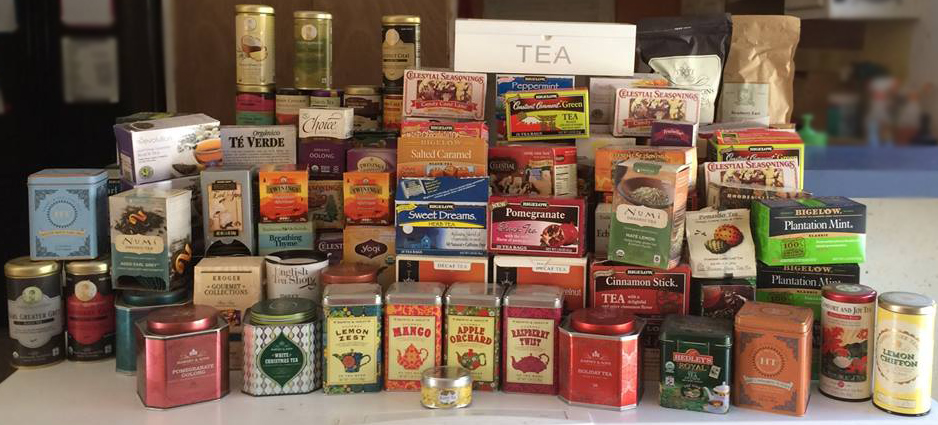
There’s nothing quite like it – that first sip from your favorite drinking vessel of precisely-heated 150° water poured over a perfect blend of dried leaves and flavoring accentuated with just a hint of sweetener. Ah…the perfect cup of tea. Or mug, in my case. 

Now, I’ll admit – I’m a tea-aholic. I drink hot tea all day, every day; all year ‘round. And – full disclosure here – until this morning, I’d never calculated the actual temperature of the water, though I can attest that fluctuations in degrees can enhance or detract from an enjoyable tea experience, at the same time acknowledging that everyone’s tastes vary. To some, a lukewarm cup of Oolong is pure heaven; to others, unless that first taste of Darjeeling scalds their tongue, it’s just not hot enough. 

My mood – and the season – dictates which flavor ends up in my mug. In spring and summer, Numi Maté Lemon or Celestial Seasonings Country Peach Passion hits the spot. Once autumn arrives, it’s Bigelow Salted Caramel or Harney & Sons Pomegranate Oolong. And there’s nothing better on a cold winter’s night than Celestial Seasonings Candy Cane Lane or Harney & Sons White Christmas Tea. And then there’s the Earl. 


As you may have figured out, I don’t discriminate when it comes to tea. White, green, red, or black; loose-leaf or bagged; caffeinated or decaffeinated; flavored or unadulterated – I love it all. But, if you told me I had to choose just one kind to drink for the rest of my life, it’d be Earl Grey. At last count, I had nine varieties – aged, lavender, raspberry, winter white, double bergamot, green, black, organic, and decaffeinated. I adore the flavor of bergamot, so much so that twenty-eight years ago I purchased the last case of Earl Grey liqueur from my local liquor store after the distributor went out of business. But, that’s a story for another time. 

Tea is more than a simple beverage to me. It’s a magical elixir. On the most stressful of days, one sip of Camellia sinensis can dissolve away every ounce of tension in my body, the aroma and taste and warmth infusing my spirit with tranquility. It comforts me, invigorates me; it's a simple joy, yet one of my most cherished. There’s nothing I anticipate more after a long day than a steaming mug of my favorite brew. 

…and Conversation 


You know what pairs well with tea? Great conversation! And, as the host of a podcast where authors get together to talk about writing, reading, and anything else that comes to mind, I’m lucky enough to enjoy both on any given day. 

Since the start of my authoring journey, I’ve searched for new ways to promote my colleagues as well as myself. Late last summer, while mulling over ideas of how to do that in a new and exciting way, an idea in the form of a podcast slowly began taking shape. Oh, who am I kidding? The concept mushroomed overnight into this larger-than-life project that I had no clue how to execute. That didn’t stop me, though. After a considerable amount of frustration trying to get it off the ground and onto the airwaves, Word Play with Kristine Raymond launched on October 31, and I haven’t looked back since. 

My first concern was that no one beyond the half-dozen friends I’d invited to be on the show would be interested in being guests. My second was that no one would listen. I shouldn’t have worried. To date, podcast episodes have been downloaded in 17 countries and on platforms including iHeart Radio, Stitcher, Apple Podcasts, Google Podcasts, and PodBean. Word on the street is that Alexa will even play it for you. 

As for guests, I have no shortage of those as I’m currently booked through August of this year and signing up more every day. And, recently, I had the honor of chatting with New York Times bestselling author Sandra Brown. Never in my wildest dreams did I think I’d have an opportunity such as that in my lifetime. 

When you listen to Word Play, you’ll discover the format isn’t the typical structured Q&A; rather, it’s a show where two authors converse about their favorite topics – sometimes book-related; sometimes not – usually with a cup of their favorite beverage close at hand.  Mine's tea, of course.

It's akin to sitting in your favorite coffee shop catching up with a friend you haven't seen in a while the conversation's unstructured, and spontaneous, and most of all, a lot of fun. And, you might just learn a thing or two about your favorite author. Or discover some new ones. Because nothing goes better with tea and conversation than books! 

Farmers' Market

  Seattle has a great number of neighborhood farmers’ markets, and I’m fortunate to have one just a mile from my house. I'd never been t...