State Fair Time ~ Lexa Fisher


It's state fair season! As has been our practice for over a decade, in late August we attended the Evergreen State Fair in Monroe, WA. Every year the fair has a theme, and you can see this year's in the photo at the side.


The 4-H (Head, Heart, Hands, Health) animal exhibits are favorite attractions for us, though I always want to take home a small farm's worth of cute animals like the ducks (I love their soft squabble sounds) and dwarf goats. 


One of my favorite challenges is to find eggs in the chicken displays. We were treated to many different chicken breeds, and even fan-tailed pigeons, but the only egg we found was in the duck exhibits.

For over a decade my husband has enjoyed the International Lumberjack ShowAxe throwing, crosscut sawing, underhand chopping, tree climbing, springboard chopping, and log rolling are all part of the skills these men demonstrate.

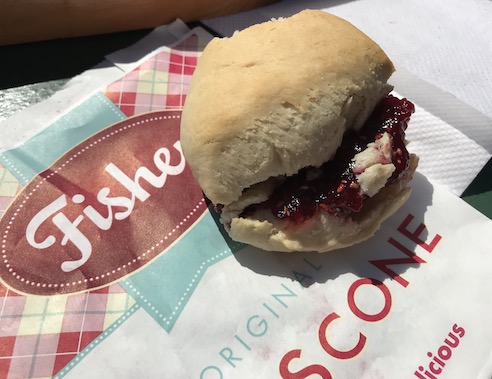
No day at the fair is complete without a Fisher scone (no relation to me), for which the fair is famous. Spread with Fisher raspberry jam, it is delicious!


After we enjoyed a scone snack, it was off to the petting zoo! The animals are friendly, and eager for their snacks, too. In addition to the usual farm yard pigs, cows, goats, ducks, mules, and ponies, this year there were even a couple of small kangaroos sharing the tent.


Not going to make it to Area 51 this summer for the big storming event? Area 51 came to the fair this year! 


There is so much to see and so much fun to have. But at the end of the day, even the animals are a bit harried. 

Until next year!


Writing, Audio Books, and the Mind of a Humor Writer ~ by Jocie McKade

Before I was a writer, I was a reader, and I still am. I can devour a book in a day. The only time I don't read is when I'm writing and on a tight deadline. It isn't often anymore that I get a couple of hours in a row to sit and read. So, over the years I've learned to grab reading time any way I can. One of the best ways I used to do this was by listening to audio books. Yes, I said 'used to'. I've had a couple of incidents, that well, let me just say audio books should come with warning labels.


"Warning: Do not operate small lawn equipment while listening to this audio book."
"Warning: Keep car windows rolled up when listening to this audio book."
"Warning: You could look like an insane woman while listening to this audio book."
"Warning: Thriller writers do this on purpose to scare the bee-jeebees out of you."

You have been warned.

I have listened to many audio books yet it wasn't until this summer I discovered some of them have sound effects. Not those nice lovely romantic background music sound ef-fects, no.

I have a riding tractor (I dream of a big tractor...someday) and it takes me about 6-hours to mow here at Dust Bunny Farm. So, instead of just idly driving around in circles I see this as an
Jocie and her tractor
opportunity to (I am woman!) multi-task. This, of course, leads me to believe I can listen to a bestseller, a self-help book (heaven knows I need some), or a learn a foreign language (I am currently working on Italian and now know all their food groups and how to ask where the bathroom is.)


Living out in the boonies I can let the grass grow a bit taller than if I lived in town, and with the weather being so horribly wet, it has made the grass tall, and in places, such as over the septic system, where there is plenty of fertilizer, quite high. Which as you’ll dis-cover hides a lot of things.

Last week, a friend lent me a Tom Clancy audio book - SSN. This is an older book, I think from back in the late 1990's, but I hadn't read it and it looked or should I say sounded pretty good. For those who aren't familiar with this book it takes place aboard the U.S. submarine USS Cheyenne (since my Baer books are set in Wyoming, this was an incentive to listen), and leads to an epic WWIII type battle/stand-off with China. I think this was based on one of Clancy's video games. Anyway, I digress.

The reader on the audio book was good, and I could hear him over the mower (some-times ya can't). I made a pass down the front field as the story started, smiling with the intro music that reminded me of my mom's tapes of old radio shows. 

Then a second voice sounded, female. This was interesting. Either this audio book had two readers or the man was really good at doing a female voice. Then I heard it, the familiar Hollywood binging that always sounds on a submarine's sonar in the movies. Since I've never been on a sub and have no desire to be on one, I accept that sound as true. Bing! Bing! The sonar sounded. Cool! Sound effects! 

I finished a dozen more passes, then the Chinese showed up.They
were stealth, they were cunning and they were deadly. The mower slowed, as I listened to the details. Bing! The sonar picked them up, just above or below, I don't remember, but they were close, everyone on board the USS Cheyenne was holding their breath. Bing! Crap, I nearly jumped off the tractor. Taking a deep breath, I angled over toward the south side of the barn. The grass was higher here, (septic system) which made me slow down even more. Yes, this was on purpose so I could hear all the details of the two subs meeting each other in battle. Bing! Bing!

Suddenly, they were lined up for attack and just as a torpedo was launched, I ran smack over a piece of chain that was lurking in the grass. The torpedo hit, the blades clanked against the chain, pieces of metal sparked in the grass, I screamed and ducked. My nose smacked the steering wheel, I shut off the blades, but forgot the engine as I bailed off the mower, the attack was intensifying. The kill-switch shut the tractor off, my knees slammed into the ground- skinning them both, the dogs next door began howling, and my hubby dropped the weed-eater, nearly having a heart attack running to see what the heck was attacking me.

"What happened?" He asked, out of breath.
"The Chinese launched a torpedo," I answered, well, I kind of screamed it in terror.
”What?" His eyes went skyward.
"No, not a bomb, a torpedo." 
His eyes went wide, as he offered a hand to get up.
“Was that a news report?” He looked at the headphones sitting lopsided on my head.
“No, here," I held up the headphones. “They just shot a torpedo at the USS Cheyenne.”
“Is that one of your audio books?” He looked at me, then at the poor broken tractor.
“With real sound effects.” I nodded, sniffing some of the blood back up my nose. 
“Honey, let’s get you out of the heat, have some water, and maybe put some ice on your nose.” Again, he stared at the tractor.  
I growled and pinched my nose to stop the bleeding, cussing Tom Clancy under my breath.

Now, you might think that was an isolated incident, oh, no, not in my life. A few days later I was happily driving to the local grocery and……..oh, that is so another story. 

PSA - Audio books are dangerous.
(post originally appeared 7/11/19 in Word Play with Kristine Raymond)


Jocie worked at several jobs before landing her ideal one as a
Jocie McKade
librarian, a perfect segue to becoming an author. 


With a soft spot for U.S. Veterans, she chaired her local Veteran's Oral History Project, and her work with the program lead to her speaking before the project committee at the U.S. Library of Congress. She has won several awards for her non-fiction writing on a multitude of subjects. 

Her fiction writing has received the Author / Ambassador at Library Journal Self-e Authors, Winner Queen of the West Reader Favorite Award, Amazon Bestseller - Historical, Double finalist in the Next Generation Indie Book Awards in the Mystery and Humorous Categories, and her novel Baer Truth received 4.5 stars from RT Book Reviews.

Writing romantic comedy and humorous cozy fiction, Jocie can find humor in most everything. She lives in the Midwest on Dust Bunny Farm with her family and Diesel the Wonder Dog. When not writing, she grows ArnoldSwartzaWeeds in her garden and camps whenever the opportunity presents itself. You can contact Jocie by clicking on the links below.

WEBSITE
FACEBOOK
PINTEREST
GOODREADS
TWITTER
BOOKBUB
AMAZON AUTHOR PAGE


Meet Our Members ~ Joanne Jaytanie

Joanne Jaytanie

Author and co-founder of Originality by Design, Joanne lives in the Pacific NW with her husband and new doberman puppy, Mazie.  To view Joanne's books and learn more about her, please click HERE

Scent as a Writing Prompt ~ Jacquolyn McMurray

On Friday, I attempted to watch a webinar about marketing and promotion.  It was a three-hour class and I was quite certain I wouldn't be able to sit still for that long.  Since it was a replay (I'd missed the live webinar), I decided I should clean my desk as I listened.  I could wipe shelves and easily sort papers into two piles, right? 

Wrong.

Midway into cleaning.

To decide what I wanted to keep and what should go to the discard pile, I needed to read some journal entries, reread various conference notes, label some new file folders, and ...well, you get the picture.  The marketing webinar soon took a back seat to exploring years of notations, ideas, and false starts.

Part of what I read were notebook entries from last December when my local writing group decided to try our hand at teaching new writers how to "Jump Start" their writing.  We began with a couple of writing prompts from Natalie Goldberg's Wild Mind, then we wrote using smell as a stimuli. 

Did you know that smell tends to jog memories and stir emotions more than our other senses? 


Photo by Silviu Bocan on Unsplash
I remember the first time I did this writing exercise.  I was in a beginning writer class and the instructor lit a cigar and passed it around the table. One of the older women left the room sobbing. The instructor picked up the woman's pen and notepad and followed her from the room.  When our twenty minute timed writing was done, the red-eyed woman rejoined the group.  We were invited, if we desired, to share a paragraph or two.  The woman volunteered and read about her cigar smoking father who had been killed in World War II. Prompted by the smell of the cigar smoke, she was able to write an agonizing story about the day she found out he was dead. 


In December, my friend set out a variety of aromatic products to choose from. I chose lemon scented furniture polish. 


Somehow, through the magic of letting go and just writing, I discovered some things that I think will help me with my current WIP.


I wrote in poetry format.  Here’s a couple of lines from my wild mind, timed writing.

Dust particles cluster
and hide under couches,
crouch under chairs,
and taunt me when I pass.

Like old hurts,
I allow them to stay, undisturbed
and embrace the lessons they offer.

For me, rereading this was powerful because the heroine of my current WIP has suffered great personal losses and she needs to find her way to a new normal.  Who knew the scent of furniture polish could prompt me to explore her past hurts and how she can come to terms with them? 


Goldberg teaches us to kick out our internal editor, choose a place and time with no distractions, and keep the pen moving. No computers allowed because typing uses a different part of your brain. Twenty minute sprints tend to be quite telling.


I’m sure there are lots of aromas that remind you of something. Sometimes the memories are fleeting thoughts, lost in the next moment. For example, the scent of roses reminds me of my mother. But I have to wonder what I might discover if I smelled roses, shut out everything else, and just wrote with no preconceived plan. 


Photo by Debby Hudson on Unsplash
If you're a writer, and you are stuck, try a free write based on a scent and see if a snippet of truth emerges. 


And my desk?  After six hours I finished cleaning and am ready to put those notations to work for my heroine.


To the Ruins ~ by Tara Neilson

The cannery in its heydey, painted by George Tsutakawa/1930s
Every day as a child was an adventure for me and my four siblings as we lived in the burned ruins of a remote Alaskan cannery. Some days had more adventure in them than others. Mail day was a day that promised parent-free adventure.
Our mail arrived at a nearby fishing village by floatplane once a week, weather permitting. We only lived seven miles of water away from the village—there were no roads, or even trails—but the route was hazardous, even deadly, because of the mercurial nature of our weather. What had been glassy water an hour before as we made the trip in a thirteen foot open Boston Whaler could turn into a maelstrom of seething white water only an hour later to catch us on the return trip.

Tides, weather forecasts, and local signs had to be carefully calculated before the trip could be made. So, it sometimes happened that we would miss several mail days in a row and get three weeks’ worth of mail all at once. My parents usually made the trip by themselves, leaving us kids behind in our floathouse home. (A regular wood frame house resting on a raft of logs.)

Our sense of adventure, always present since our family comprised the entire population of humans for miles in any direction, quadrupled as we waved good-bye to them. We watched them turn into a speck out on the broad bay with the mountain ranges of vast Prince of Wales Island providing a breathtaking backdrop for them.

Then we cut loose. We ran around the beaches, jumping into piles of salt-sticky seaweed and yelling at the top of our lungs, the dogs chasing us and barking joyously. We tended to do this every day, but this was different. We lived in an untamed wilderness that could kill full grown adults in a multitude of ways and we children had it all to ourselves.

At our backs was the mysterious forest that climbed to a 3,000 foot high mountain that looked like a man lying on his back staring up at the sky that we called “The Old Man.” In front of us was the expanse of unpredictable water with no traffic on it, except for the humpback whales, sea lions, and water fowl.
And we were the only humans to be seen in all of it.

As we scattered, my littlest brother, Chris, wound up with me in our twelve-foot, aluminum rowing skiff. I was twelve and he was seven, and we were buckled up in our protective, bright orange lifejackets that we never went anywhere without.

“Where shall we go, Sir Christopher?” I asked in a faux British voice as I sat in the middle seat with an oar on either side of me. “Your wish is my command.”

Me (with my baby doll) and my youngest brother Chris
with pilings from the old cannery in the background
 
He sat in the stern seat and chortled. Whereas I was blonde and blue-eyed, he had almost black hair and green-flecked brown eyes. Despite the surface differences, we had a lot in common, being the most accommodating and easygoing ones in our family. We usually let others take the lead, but this time we would make our own adventure.

“I don’t know,” he said. “Where do you want to go?”

I looked around. The floathouse sat above a small stream below the forest, its float logs dry, since the tide was halfway out. Opposite it was a smaller floathouse we called the wanigan that we used to go to school in, before our dad built a school for us on land, but was now the washhouse.

The small, sheltered cove suddenly felt restrictive since it was the only part of the old cannery we saw on a regular basis, and there wasn’t much of the old cannery to see, just some pilings sticking half out of the water.

“Let’s go to the ruins,” I said.

He gazed at me raptly. The main cannery site had been built next to the large salmon creek and sat on the other side of a high-ridged peninsula from the little bay our floathouse was in. We rarely got to visit it, even as close as it was, because the salmon creek was where the bears roamed. But we would be safe in the skiff, I told him.

Chris bounced on his seat and nodded excitedly.

I dug the oars into the silky green water and we headed for the big rock that partially protected our little cove from the storm-prone bay. Mom had made it a law that we were never to get out of sight of the floathouse, but Mom wasn’t there.

So, for the first time I dipped the oars in unexplored waters, rowing past the weathered grave marker of some unknown cannery resident. Tall black bluffs loomed up at the same time a swell rocked us. There was nowhere to beach the skiff now, if we needed to…we were committed to continue.

Chris gripped the aluminum seat and stared at me, silently asking if we were really going to do this. I nodded.

Each pull of the oars took us farther away from the homey familiarity of the floathouse and its confined bay. We were exposed to the full effect of the wilderness now, the enormous sky above, impenetrable, towering bluffs washed by waves to our right, and the endless waterways of Southeast Alaska on our left.

My back was to the view ahead of us as I rowed. I was getting tired, but I didn’t want to admit it to my little brother. Suddenly Chris sat up straight on his seat and pointed. “Look!”

I turned my head. Up on the rocky bluffs just ahead of us was a huge steel cylinder with a peaked roof. Its original, unpainted grey could be seen through the rust of untended decades. It had sat sentinel there, below the tall mountain, with few humans visiting it or seeing it since the cannery burned shortly after World War II.

Awed, we stared at it, and then I turned to the oars with renewed energy. I kept throwing glances over my shoulder. I didn’t want to miss the first glimpse of the ruins.

And then there it was, the old cannery site.

A forest of fire-scorched pilings, one with a stunted tree growing on it, stood between the forest and the bay. The blackened timbers of a building’s foundations remained below the evergreens’ skirts and giant concrete blocks stood out whitely above the rust colored beach. In amidst the pilings were strange, rusty skeletons of former machinery. The creek rumbled past all of it.

“It looks like it was bombed,” Chris piped up. “Like an atom bomb
The cannery ruins
was dropped on it." 

 
“It does.” I tried to picture what it would have looked like when it was whole and people lived and worked at this remote location. The buildings, like all the canneries in Alaska, would have been barn red with white trim, glowing in the water-reflected light. The sound of machinery would have competed with the constant rumble of the creek and men and boats would have been working above and around the pilings of the wharf as clouds of shrieking gulls filled the air.

“If we could time travel,” I said, “we could step into their world when the cannery first operated and watch the fish being packed into cases to be sent out into a world that didn’t know atom bombs could exist.”

I didn’t try to row us closer and Chris didn’t suggest getting out on shore. We could see big, dark moving things in the creek that we knew were bears. I didn’t want to draw their attention because, although I didn’t mention it to Chris, I knew they were powerful swimmers and could probably overtake us if they’d wanted to.

We sat in the small skiff with the water lapping against the aluminum sides, rocking in the swell, and gazed at the ruins of a former world, gone long before we were born.

Then I turned the skiff around and we headed for home, promising each other we wouldn’t tell anyone about this adventure. This one was just ours.


Tara Neilson arrived in SE Alaska when she was six, the second oldest of five kids. Her father was a logger and fisherman and towed their float-house home from one location to the next before finally settling in the isolated ruins of a burned cannery. They were the only humans for miles. 

As an adult Tara has held down a multitude of jobs from cook on a wilderness guide boat, wilderness lodge fish packer, assistant at an art gallery, teacher's aide at a one room school and has written for a range of publications. Her memoir Raised in Ruins releases in April 2020.

Farmers' Market

  Seattle has a great number of neighborhood farmers’ markets, and I’m fortunate to have one just a mile from my house. I'd never been t...