Showing posts with label #gardening. Show all posts

Let the Gardening Begin!


Dirt, compost, and soil builder

A few days' tomato harvest
Let gardening begin? Isn’t fall the time to harvest? We are still harvesting tomatoes
, more tomatoes than I care to see the rest of the year. 😀 But squash was a bust, except for the pattypan squash. This was the first time I’ve tried patty pan, and it’s worth a try again next year. 


Pattypan squash
But to the topic of beginning, fall is the time to get started on next year's garden—from the ground up. I’m adding soil booster, a rich mixture of compost and organic matter that will allow better air to plant roots. Perlite, is an organic volcanic glass that improves aeration and drainage, and the addition of peat moss will enhance water retention.


Once the weather finally cools (we saw 90 degrees twice this week!), I can start transplanting blueberries and raspberries to new garden beds. I’ll have an entire 8x4-foot bed for each.


Rhubarb starts

We love fruit, and it grows well in my “yarden”, but dedicating three
beds to fruit doesn’t mean we won’t have some vegetables. I have six new rhubarb plants for a 3x3 bed, and will try moving asparagus to its own 3x3 bed. The latter may be risky, but the squirrels aren’t giving the asparagus much of a chance where it is now, and the new bed will allow me to cover everything easily, thwarting the squirrels.

After all that, the really big job begins when I pull the strawberries out of their 8x4 bed so I can enrich that soil before putting the plants back in. I have a lot of work ahead of me, but also a lot to look forward to! 

Just as fall starts, rain is predicted on Sunday. At least watering the garden is done for the season. 

Photo by John Noonan on Unsplash


Cherry on Top


Our dwarf cherry tree is three years old and this year it paid for itself with the great crop we harvested! Getting those five pounds required care. First, I kept watch to keep squirrels from eating the blossoms—yes, that’s something they do. Then, to keep squirrels and birds from eating the fruit as it ripened, we covered the tree in garden netting.

So, what to do with all those delicious cherries? Out came the recipes and the next two weeks I was busy in the kitchen making cherry cake, cherry cobbler, cherry crisp, and, after a suggestion from my sister, dried cherries.

Cherry cake
First, I made the cherry cake, which was delicious. But the cherry cobbler was our favorite, so much so that a “mouse” got into it before I could take a photo. 🤤 We enjoyed both with vanilla ice cream.  

Cherry cobbler. Recipe


Finding a cherry cobbler that used fresh, not canned cherries, took a bit of Googling. I was surprised by how well sprinkling the fruit on top turned out with this recipe. 


Cherry crisp turned out just as good, and was even better with ice cream or frozen whipped topping.


Dried cherries


I was delighted by how well the dried cherries turned out, and they are yummy in oatmeal and granola. Drying the cherries did take ten hours in a dehydrator, but I’m glad I tried it.

I’m now trying to propagate the cherry tree so that in a few years we can get more fruit. While our yard isn’t large, the tree should thrive several years in a ten-gallon pot. Life is more than a bowl (or two) of cherries—it’s a whole ‘nother tree.


Eeek!


Yes, Halloween is approaching, but that’s not what frightened me this month. No, it was the apples that needed to be sliced for freezing, or

turned into applesauce and apple butter. Then it was the cucumbers to be pickled, followed by tomatoes to be sauced. Garden cleanup for final fruiting began and next month I will be transplanting these raspberries as well as planting a few new blueberry bushes. 


Halloween cards are under way and I’ve used a few different techniques this year. One new technique involved quite a learning
curse, er rather, curve. 😉 There were many stencils that I wanted to buy for making cards but instead, I went to my Cricut to cut stencils with happy results! This simple pumpkin face and the photo at top are done with stencils I made on the Cricut.


Bowl Cozy
Soon Thanksgiving and autumn cards will be started, and of course, Christmas gift planning is already underway. Learning curves continued when I took another sewing class to make bowl cozies. They turned out great and gave me ideas for Christmas gift bags!


And what else happens in November? Why, it’s NaNoWriMo—National Novel Writing Month. I’m plotting another Christmas story to write in November. It’s 50,000 words in November for the “win”! 


With all that fall planning underway I'll be sure to stock chocolate for the trick-or-treaters! (And a piece or two for myself 😊.)


Quashed!


Trellised Squash

I’d been planning my 2024 garden for months, and double-checked a list of vegetables in the brassica family. Due to a thyroid condition I have to avoid brassicas, so they shouldn’t be taking up space in my raised beds.

Plans quashed! The brassica list is longer than I realized and includes the well-known broccoli, cauliflower, and Brussel sprouts. Never having grown those successfully, I wasn’t disappointed. However, greens I love such as arugula, Swiss chard, and bok choy are also brassicas.

https://whatscookingamerica.net/squash.htm
Fortunately, I love squash so I searched the Burpee seed catalog last month for several varieties to plant in the new 4x8 raised bed that I have. This year I’ll be trying baby butternut (my favorite squash), a new squash that resembles the look and taste of mashed potatoes, acorn squash, sugar pie pumpkins*, and winter delicata.


I don’t have a lot of horizontal garden space, so the squash will grow on trellises (photo at top of page) which worked out well last year. Beans are a great companion plant for squash, and this year dragon’s tongue and scarlet runner beans will join the squash. The latter can also be trellised. Last year we had more beans than I could enjoy fresh, so the rest went into the freezer.


*I use a lot of canned pumpkin as a replacement for oil or applesauce in recipes such as these bran muffins. Be sure to toss in a teaspoon or two of pumpkin spice and some cranberries for a fall treat!

https://www.bobsredmill.com/recipes/how-to-make/moist-molasses-bran-muffins/

I am often low on eggs, so I replace the two beaten eggs in the recipe with a mixture of a tablespoon each of chia seeds and ground flax as a binder. It is so good that I make the muffins with the egg substitute every time. Extra fiber and Omega-3 too!

Pumpkin seeds are a great substitute for nuts and I look forward to roasting my own pumpkin seeds this year. The original garden plan may have been quashed, but now it's squash!


Bloom Time!


Now that plants have been well-watered by April’s showers and the sun is finally out, shrubs and trees are blooming and most notably, the neighborhood is filled with the scent of lilacs. The flowery aroma is filling the house this year because May has been warm enough to have windows open. On a recent walk we saw white lilacs and more shades of purple than I knew lilacs could be.


The state flower, rhododendron, is bursting forth throughout the neighborhood in shades from pale pink to the vivid red here too.


Are we ever going to have apples this year! Pear, cherry, and plum trees also have tiny fruits beginning to grow. If I run out of freezer space for applesauce I can share the apple crop with a nearby little pantry.


The strawberry harvest looks to be shaping up for a good year, and I’m hoping to keep bunnies and squirrels from eating the fruit by covering it once the blossoms are done. Don’t worry, there are strawberries in the backyard for the wildlife to enjoy. Later this month more strawberry plants will be joining the blueberries and filling in bare spots in the yard.


Speaking of blueberries, they are flowering and this will be the first year we’ve had a crop from the raised bed in the front yard.


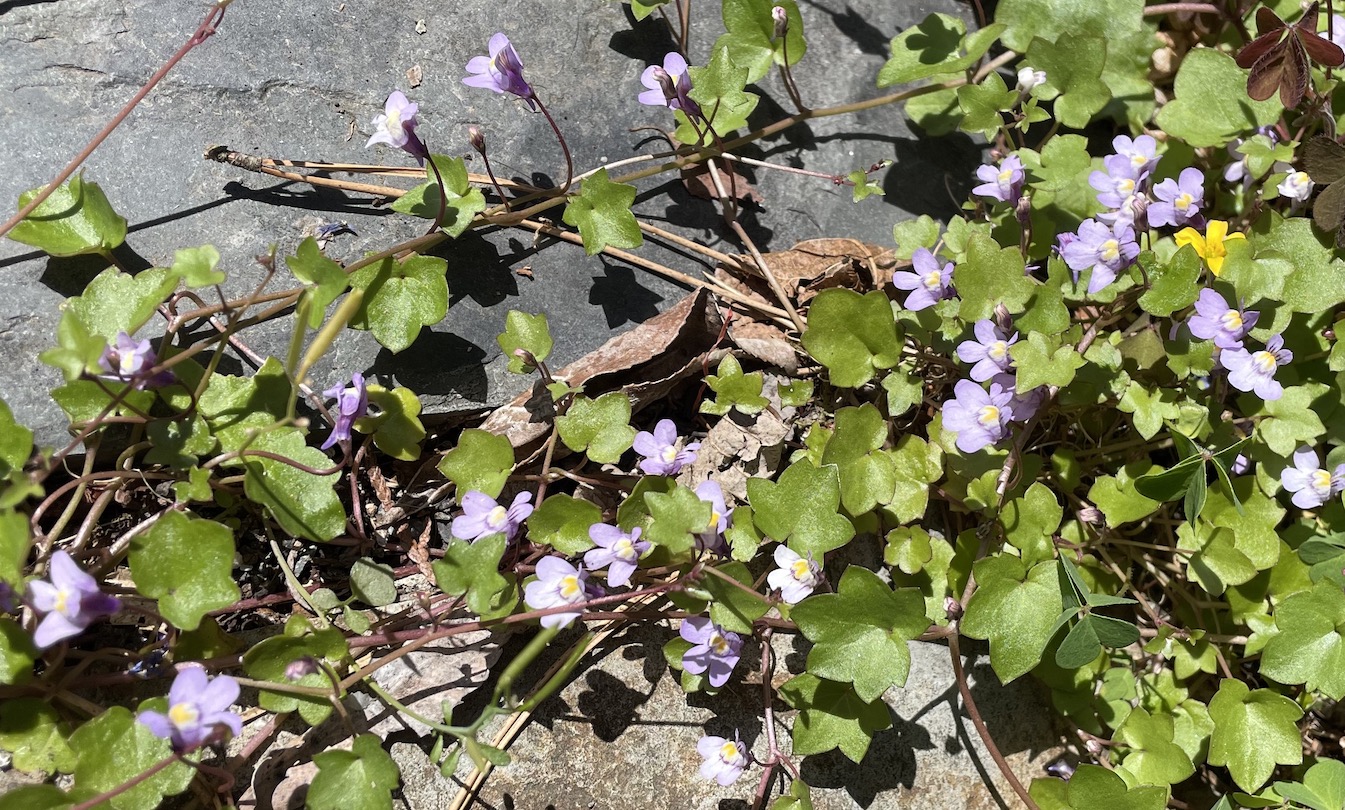
This little creeper, Kenilworth ivy, also graces the yard and didn't cost me a penny. Unlike many gardeners, I’m happy to have it trailing around walls and planters. 


 Soon bee balm, hyssop, lavender, and sage will be in bloom to provide a continuing buffet for bees that make all the fruit possible.


Ready, Set, Grow!


Asian pear ready to go!

It’s been an unusually cold, wet, windy March and April here in the Pacific NorthWet. Not many fruit plants are budding yet, but our Asian pear (above) is ready to get this season going! Buds are bursting out greater than previous years. Most of the other fruit trees and vines are saying "Slow down, it's still too cold and wet!"

Plum just starting to blossom

I was diligent this winter (when it was milder) about fertilizing all our fruit plants in February and again in March, also adding compost to the soil to provide good nutrients. I’m eager to see how the blueberries, raspberries, cherries, pears (new this year), plums, and apples perform. I’d love to be able to do more canning and preserving of home-grown fruit!


Garlic left in raised beds over winter is coming on strong. The asparagus planted last spring is starting to come up, and rhubarb that I divided in late winter is also robust. Several onions that I'd left as failures last year are now reaching through the soggy soil.


New this year are two elderberry plants that are slow to

Hyssop coming back vigorously
show growth, but the season is still young. I also doubled the number of blueberry plants in a raised bed last fall. Hyssop has surprised me with a vigorous re-emergence from last year, and the bee balm from last summer that I’ve already divided is coming along well.

This year I will focus on more plants to attract bees and look forward to putting in more bee balm and hyssop. Calendula is a flower I’ve never grown, but will sow outside in a couple weeks. I’m hoping the poppies I planted last year have self-sown and will also come back.

I've had some luck this year transplanting and propagating. Flowering red currant is one of my favorite plants for attracting hummingbirds, and despite the cold weather, it is showing its beauty. Later this year I'll plant ones I'm propagating for even more showy pink blossoms throughout the yard!

Flowering red currant   


One Thing Led to Another


Source

I vowed not to take any more online classes until I retired, but the temptation was so great that I took a writing class again last fall. Just two days into a week-long, lunch time class I realized I wouldn’t be able to finish due to work demands. Still, I love learning and had to find a way!
 

I turned to online self-paced courses and these, I’m delighted to say, are working perfectly. There are even Facebook groups associated with the classes, and unlike in-person classes, I virtually meet people from all over the world and learn from their questions and different situations.

My first venture with an online class grew from my interest in cooking with herbs and wanting to know how to use herbs in healing teas. I’m especially interested in contraindications—when NOT to use particular herbs. 

This interest led to an online class in herbalism
with the Herbal Academy. The class turned out to be much more intense than I was prepared for, but I could take my own sweet time, any time, and it was a success! For anyone else interested, the additional cost for the book set is worth it.


Amazon
 This class led to the purchase of an herbal calendar that I love. Every other day it has useful and interesting facts on herbs ranging from history, medicinal uses, growing tips, and recipes.


Course


Through the Herbal Academy Facebook group I then learned of Grow, Forage, Cook, Ferment, a self-paced online class covering foraged plants and how to use them. Yes, that led to me enrolling just a day after learning of this course.


All of this has led to even more herbs planned for my garden, such as purslane, purple dead nettle, self-heal, miner’s lettuce, calendula, and more. One herb I had to remove was lemon balm as it is contraindicated with thyroid conditions. My spiral herb garden is now where the lemon balm patch was.

I’ve also learned of some edible wild plants that already grow in my yard such as chickweed, wild violet, plantain, and the ubiquitous dandelion. Since I grow organically and have no outside pets, I can be assured my plants are safe to consume (though I of course still wash them!).

As my garden grows I look forward to seeing where my herbalism and gardening paths leads next!

Unsplash


Down on the City Farm


The UW Farm is a 1.5 acre student-powered urban farm & educational facility located on the University of Washington’s Seattle Campus.
 

In the past month I finally had the opportunity to volunteer with the University of Washington Farm. I'm proud to say, even in the city of Seattle, college students can learn how food is grown and then processed for food banks, UW campus dining, and community Supported Agriculture (CSA) boxes.

Sorting tomatoes for CSA bags
My volunteer shift started by learning about the sanitization process for harvesting produce. We all had to wash our hands, then cutting tools and food collection bins were dipped in a weak bleach solution. The bins could not touch the ground, so while we harvested the collection bins rested inside larger bins that sat on the ground. If the cutting tools touched the ground, they were re-sanitized before they could be used again. We also could not use gloves because they can't be cleaned well enough.

A boar tomato I was able to bring home
Our first assignment was harvesting cabbages which took little time, but was dirty without gloves! Then it was on to rows and rows of various tomatoes. I learned that crows attack red things, so any red variety of tomato was harvested before fully mature. Some tomatoes had ripened in the past few days and were indeed pecked by crows.

I learned there are two types of tomato plants: determinate and indeterminate (potatoes, too!). Determinate (bush) tomato plants are bred to stop growing usually somewhere around 3′-4′ feet tall. When flowers blossom at the tips of the branches, the plant has reached its full height.

Indeterminate tomato plants are tall and require staking or caging as they keep growing taller and taller all season. They produce fruits over a long period and in tropical climates or heated greenhouses, produce continuously. When grown outside they’re usually mid-season to late types.

Source
All through the rows of tomato plants, purslane was growing and is often included in the CSA boxes along with recipes on how it can be used. Purslane is a vegetable rich in omega-3 fatty acids and can easily establish itself throughout a garden. 


It was a great experience, though I'd expected to be able to wear gloves for harvesting and it took days to get dirt out from under my nails. 😀

Unsplash


Crafting with Herbs


Photo credit

I vowed not to take multi-day classes until I retired, there just isn't enough time. But retirement has been pushed out and I couldn’t wait. Understanding how to grow and use herbs has been one of my top interests. When I learned about Herbal Academy it didn’t take more than a day for me to abandon my vow and decide to enroll in the introductory herb class.

Unsplash 
With plenty of borage outside my door, the first herbal recipe I tried was fresh borage leaf tea. The taste is mild and not unpleasant, quite like a weak green tea. Learning that it helps with stress and insomnia makes it a winner for me. Borage self-sows and I have it all around the yard from spring to fall.
 

Unsplash


July also meant another trip to my local nursery where I picked up more herbs for my new herb spiral garden. My purchases included the bee-friendly plants bee balm, hyssop, and lavender that are now blossoming. These plants can also be used for herbal teas, tinctures, and salves. I'm eager to make a rosemary-lavender hand salve.

After the flowering plants have lost their blooms I’ll be saving the seeds to start next year’s plants. The sunny side of the backyard will become a bee haven!

Source


Throughout the summer, bees swarm the chive, oregano, rosemary, thyme, and savory blossoms. I’ve often wished I could get the herbal honey they are making. Then, this week in my herb class, I learned how to make herbal honey with dried herbs and I can’t wait to try this. My herbal class has introduced me to excellent sources of dried herbs for those that won't grow in my climate.

The next step in my herbal crafting journey will be stovetop hydrosols. Perhaps if my new peppermint and spearmint plants are bountiful I can create a refreshing mint hydrosol before summer is over.

I'm very happy I decided to take this course as I can now use the information before retirement to get a head start on experimenting with cultivating herbs and putting them to various uses. In fact, I'm so happy with my decision that I've already enrolled in a month-long class during September. Life long learning is the true goal after all, so why wait?


Unsplash


All Wound up with Herbs


Source

Hours after pulling out several feet of the "weed" above I learned it is one of the medicinal plants I should be harvesting--purple dead nettle. Argh! Fortunately, there are a few plants I missed so those will come back in abundance next year.

Source
Another "weed" I will be planting is heal-all or self-heal. Both self-heal and purple dead nettle can be used in salads and teas, the latter is my goal. Both have been used for centuries by indigenous peoples.


Source
While studying herbs and watching videos on their use, I came across spiral herb gardens. You can guess what happened next. 😀 But first, I'll share more about spiral herb gardens, as shown in the following photos. 


Source
One advantage of a spiral herb garden is that it lets you grow a lot of herbs in a small space--six feet in diameter with three tiers. The taller plants in the center should be those that love heat, such as the Mediterranean herbs rosemary, thyme, and oregano. The lower tiers get more drainage and shade from the taller plants, and this is ideal for dill, cilantro, and sage.

Another advantage for me is that it clears space in one of my planter boxes in the front yard for more vegetables. The backyard space I've already cleared has sufficient sunlight for herbs.

Clearing space in the backyard went quickly, and building materials for the spiral herb garden have come from reclaimed sources already on hand--plenty of forest duff for fill and rocks pulled out of the ground for the spiral walls. Here's what we've accomplished in an afternoon's work. Not bad for the first day!

Ready soon for plants!


Anticipatory Joy


Lupine at my favorite local nursery

I recently attended a lecture given by a nurse at our local teaching hospital. If anyone is qualified to talk about stress and tips for coping, it's healthcare staff. She told us that anticipatory joy is what gets her through long, emotionally difficult shifts. 

Anticipatory joy is defined in the linked article as "the in-the-moment pleasure experienced when imagining a future event". Through anticipatory joy "We can find joy in the present through luscious ruminations over wonderful things to come. Anticipatory joy can bring light to the dreary present."

Unsplash
In Seattle, our first week of May saw more rain than we normally get in a month. My husband joked that we'd need a boating license to get to the post office. It was wet and so very dreary. Every soggy day I looked forward to that first trip of the year to my favorite nursery. 

Photo by Oriol Portell on Unsplash
On the long-awaited day the skies even cleared as I searched for herb and vegetable starts on the list I'd curated over the winter. It's still too cold to plant the honeydew melons that I most anticipate, but I've got them started indoors and have pored over tips to help me have a successful crop.
 

Another joy awaiting me this month is an online class "Tending Your Medicinal Garden". While I'm wildly successful with the many herbs I grow, I'm eager to learn about the healing benefits of native plants and which ones I might add to the garden. Or maybe I can seek them out in the yard, thinking once that they were only weeds.


The heavy clouds that are soaking us this month have one silver lining-- the mountain snowpack has raised from 80% of normal to 126%. I expect a hot summer if climate change continues our dry spells and will be grateful for the snow and rains. Soon, I look forward to a few days off to spend in the yard and garden. Until then, like the wild bunny in our backyard, I eagerly await the first fruit of the season, strawberries.


Port Gamble Ghosts

  Earlier this month we visited the ever-so-quaint town of Port Gamble, WA . Many of the homes (few there are) are Victorian-style, and the ...