Showing posts with label #bees. Show all posts

Busy as a Bee


https://21acres.org/event/pollinator-fest-2025/

Later this month, my husband and I will be vendors at a local pollinator fest. There, attendees can learn all about bees, buy bee-related merchandise and local organic food. They can also wander a 21-acre farm filled with gardens of fruits, vegetables, and flowering plants.

My husband makes bee watering stations that need only a Mason jar or soda bottle to provide water. In autumn and winter especially, bees benefit from supplemental food and water, thus these feeders. 


The bee watering design and a customer photo.


Pattern and instructions: https://www.youtube.com/shorts/H3TFBWSYd28

Once he signed up as a vendor, I thought about other bee wares we could offer. After a trip to a fabric store, out came the sewing machine. The items I made are simple and took little time. The most useful items, in my opinion, are the pocket tissue holders, the easiest pattern ever! If it's pollen(ator) season, tissues might come in handy.


Another pattern I found was for scrunchies. Sew a simple tube, pull elastic through, and you’re done! 


Pattern: https://seekatesew.com/diy-gift-guide-free-diy-coffee-cozy-pattern


I had plenty more fabric at my disposal and found another easy pattern for cup cozies. These were the most time-consuming items due to needing four pieces of material cut out and fusible interfacing ironed on. Still, they were straightforward to make, and even cuter with little flower buttons to close the two ends. 


Instructions: https://www.youtube.com/watch?v=MIAqzWg5Ikc
Finally, I thought these fabric trays to hold all my items would be especially decorative. This is another pattern that was easy to sew and I’m very happy with how they turned out. After the pollinator festival I will find uses for them around the house.

I had fun bee-ing creative and hope visitors will enjoy all of the items we've both made. Here is our favorite bee quote by Elizabeth Lawrence.


Photo credit: https://homeiswheretheboatis.net/2017/07/19/the-hum-of-bees-is-the-voice-of-the-garden/


Bloom Time!


Now that plants have been well-watered by April’s showers and the sun is finally out, shrubs and trees are blooming and most notably, the neighborhood is filled with the scent of lilacs. The flowery aroma is filling the house this year because May has been warm enough to have windows open. On a recent walk we saw white lilacs and more shades of purple than I knew lilacs could be.


The state flower, rhododendron, is bursting forth throughout the neighborhood in shades from pale pink to the vivid red here too.


Are we ever going to have apples this year! Pear, cherry, and plum trees also have tiny fruits beginning to grow. If I run out of freezer space for applesauce I can share the apple crop with a nearby little pantry.


The strawberry harvest looks to be shaping up for a good year, and I’m hoping to keep bunnies and squirrels from eating the fruit by covering it once the blossoms are done. Don’t worry, there are strawberries in the backyard for the wildlife to enjoy. Later this month more strawberry plants will be joining the blueberries and filling in bare spots in the yard.


Speaking of blueberries, they are flowering and this will be the first year we’ve had a crop from the raised bed in the front yard.


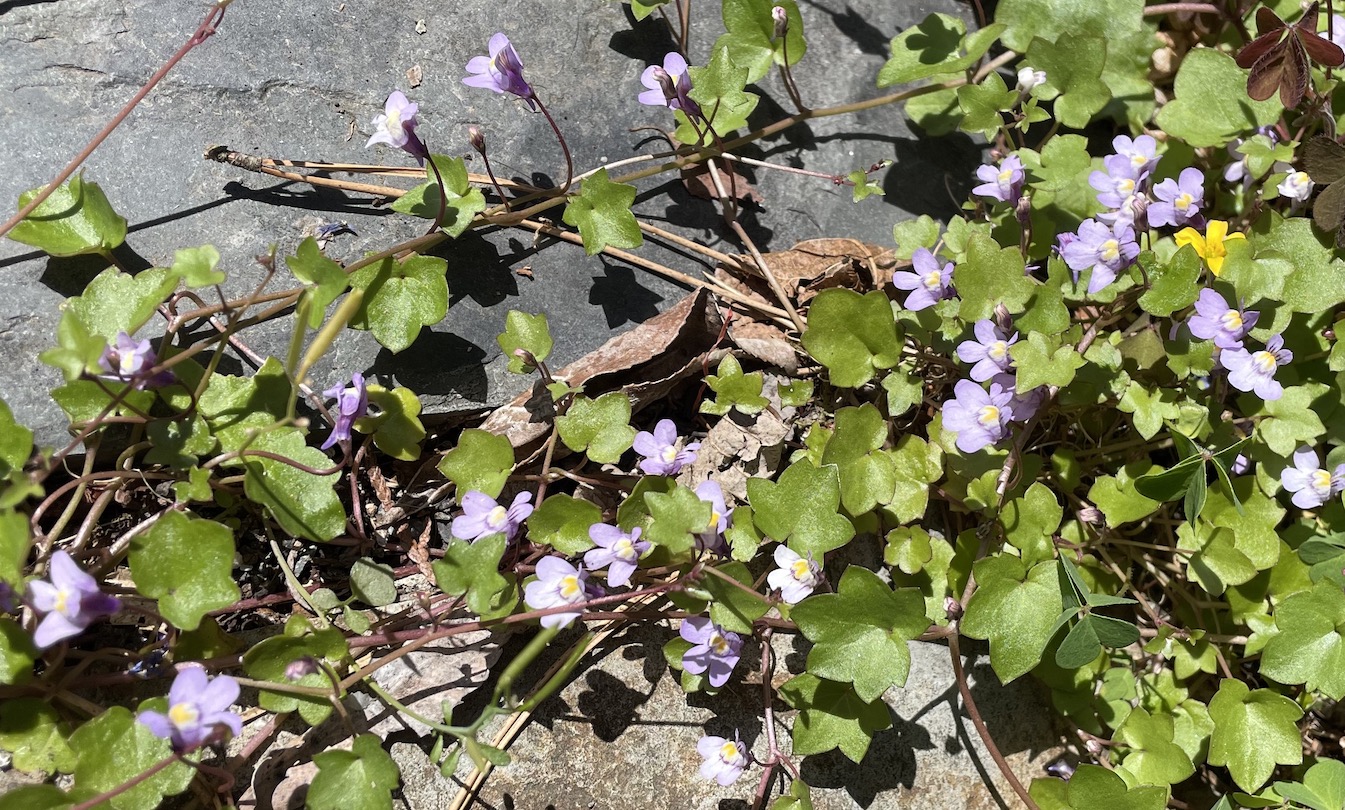
This little creeper, Kenilworth ivy, also graces the yard and didn't cost me a penny. Unlike many gardeners, I’m happy to have it trailing around walls and planters. 


 Soon bee balm, hyssop, lavender, and sage will be in bloom to provide a continuing buffet for bees that make all the fruit possible.


Ready, Set, Grow!


Asian pear ready to go!

It’s been an unusually cold, wet, windy March and April here in the Pacific NorthWet. Not many fruit plants are budding yet, but our Asian pear (above) is ready to get this season going! Buds are bursting out greater than previous years. Most of the other fruit trees and vines are saying "Slow down, it's still too cold and wet!"

Plum just starting to blossom

I was diligent this winter (when it was milder) about fertilizing all our fruit plants in February and again in March, also adding compost to the soil to provide good nutrients. I’m eager to see how the blueberries, raspberries, cherries, pears (new this year), plums, and apples perform. I’d love to be able to do more canning and preserving of home-grown fruit!


Garlic left in raised beds over winter is coming on strong. The asparagus planted last spring is starting to come up, and rhubarb that I divided in late winter is also robust. Several onions that I'd left as failures last year are now reaching through the soggy soil.


New this year are two elderberry plants that are slow to

Hyssop coming back vigorously
show growth, but the season is still young. I also doubled the number of blueberry plants in a raised bed last fall. Hyssop has surprised me with a vigorous re-emergence from last year, and the bee balm from last summer that I’ve already divided is coming along well.

This year I will focus on more plants to attract bees and look forward to putting in more bee balm and hyssop. Calendula is a flower I’ve never grown, but will sow outside in a couple weeks. I’m hoping the poppies I planted last year have self-sown and will also come back.

I've had some luck this year transplanting and propagating. Flowering red currant is one of my favorite plants for attracting hummingbirds, and despite the cold weather, it is showing its beauty. Later this year I'll plant ones I'm propagating for even more showy pink blossoms throughout the yard!

Flowering red currant   


The Blessed Bee


Photo by Łukasz Rawa on Unsplash

Now that my apples, plums, raspberries, blueberries, and strawberries are in bloom, it's time to focus on the all-important bee. One third of the planet's food relies on these tiny tireless creatures. Pollinators in my area include the honey bee, bumble bee, mason bee, and leaf-cutter bee. (Fig trees are actually pollinated by fig wasps.)

Available on Etsy
 

Flying from blossom to blossom makes a bee thirsty! My husband has been making bee watering stations that attach to either a standard soda bottle or quart-sized Mason jar. Do the bees like them? One beekeeper gave us proof! My husband started making the larger size for beekeepers so they wouldn't need to refill them more than once daily.


Photo from Prairie Homestead

 Bees are more than just pollinators--they also give us delicious honey and beeswax. Speaking of beeswax, the creative buzz followed us into the kitchen where my husband recently tried his hand at beeswax candles. We've learned a lot in just one trial!


Wick type and size, preparation of the wick, candle size, temperature of the wax and jar, all make a big difference in a successful outcome.

While perusing one of my old books on candle making, we found the origins of some old sayings. Beeswax was mixed with a lead compound and used as a base makeup by wealthy women to enhance their beauty. This white paste was kept dry in the summer months by shielding the face from the sun with a fan. This way, the ladies could 'save face'. They were also careful never to express mirth so they wouldn't 'crack a smile'.* 

My appreciation of bees extends to card making, and we can't talk about bees without mentioning the birds, too. We have a bird feeder in one window and it's popular with our feathered friends.


However, the feeder leads to some bird injuries. Using more of my card making supplies, these holographic bees keep birds from flying into our windows. I've put half a dozen in the busiest windows to keep the birds safe.


 *Source: The Candlemaker’s Companion, Storey Communications, Inc. 1997, Betty Oppenheimer


Ghostly Research

  Photo by Eugene Golovesov on Unsplash Fog shrouds early mornings this month, hiding even the houses right across the street. It’s a perfec...